

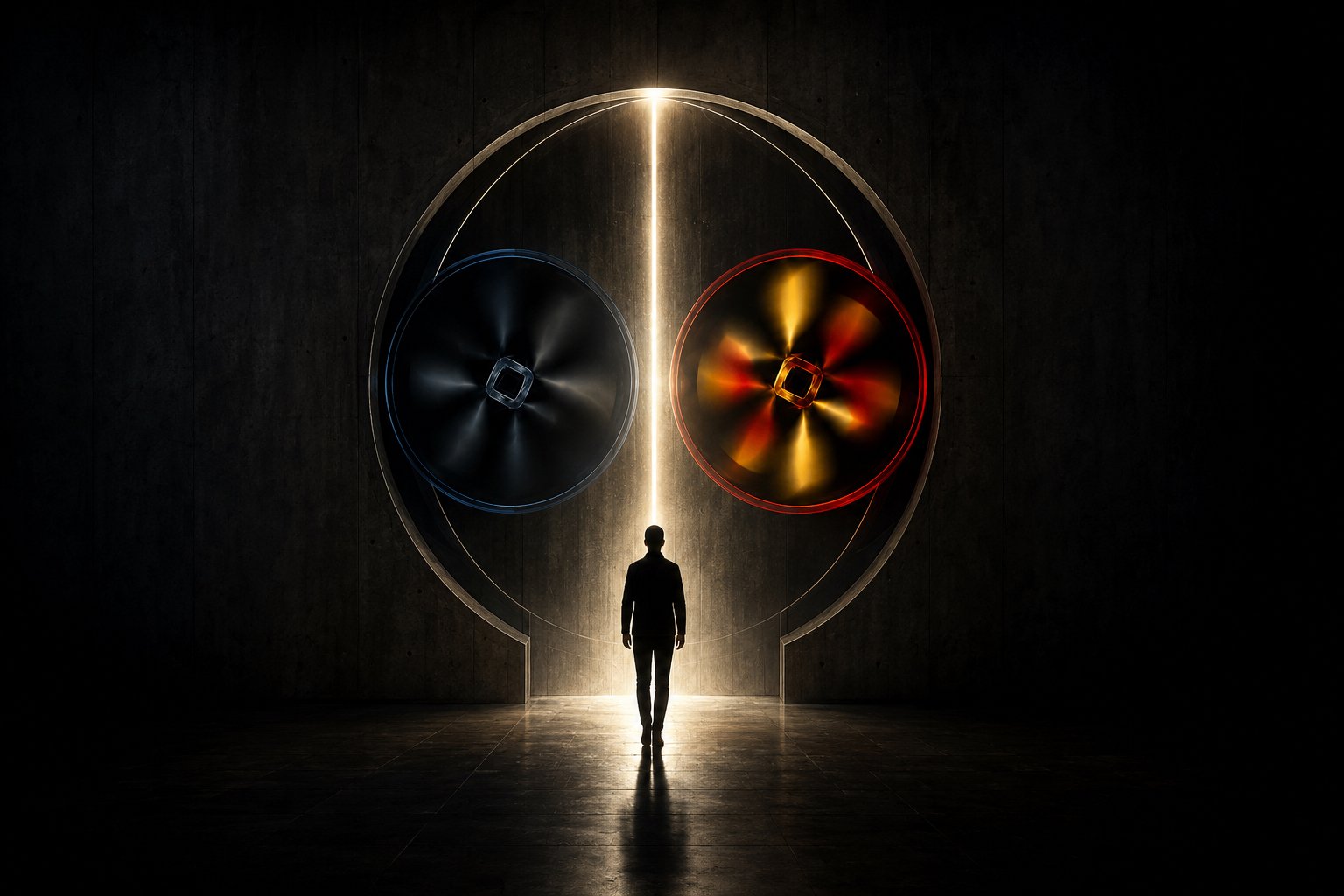
BEYOND GENERATION
What remains profoundly human in the age of artificial intelligence?
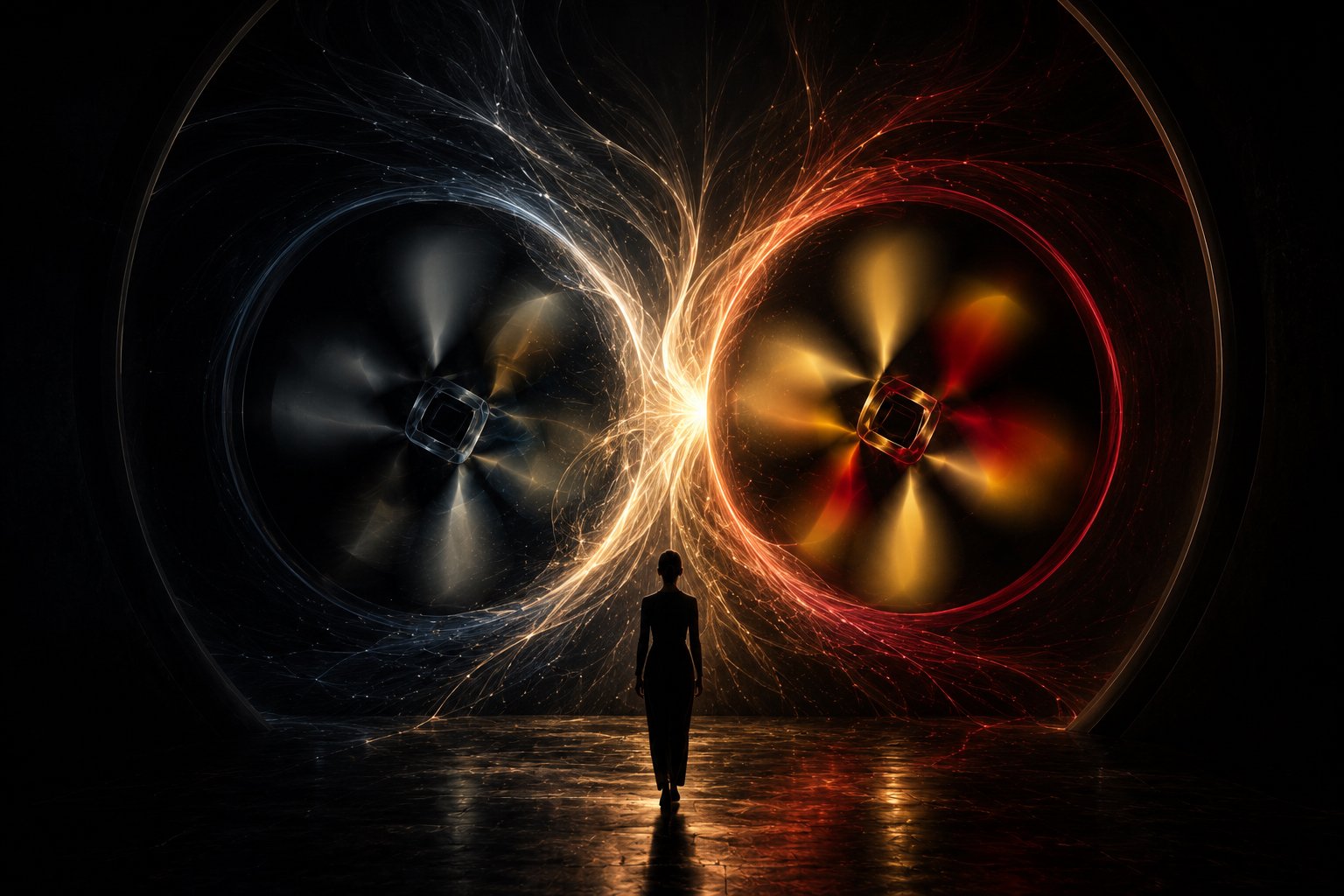
MY RESEARCH
The research will evolve through visual experimentation, prototyping, interaction design, spatial exploration, and collaboration with technological and scientific environments.

HOW DO WE EXPERIENCE WHAT WE SEE?
Beyond Generation brings contemporary art into dialogue with science and technology to explore how human perception, creativity, and consciousness evolve in an age of artificial intelligence. The research combines visual experimentation with scientific and technological perspectives, not to explain these fields, but to create new ways of experiencing and questioning them. The works are conceived as large-scale visual environments, allowing each piece to unfold through movement, space, light, and perception. Together, they form an evolving visual language where art becomes a space for experimentation, observation, and discovery.
HUMAN CREATION & AI IN THE RESEARCH PROCESS
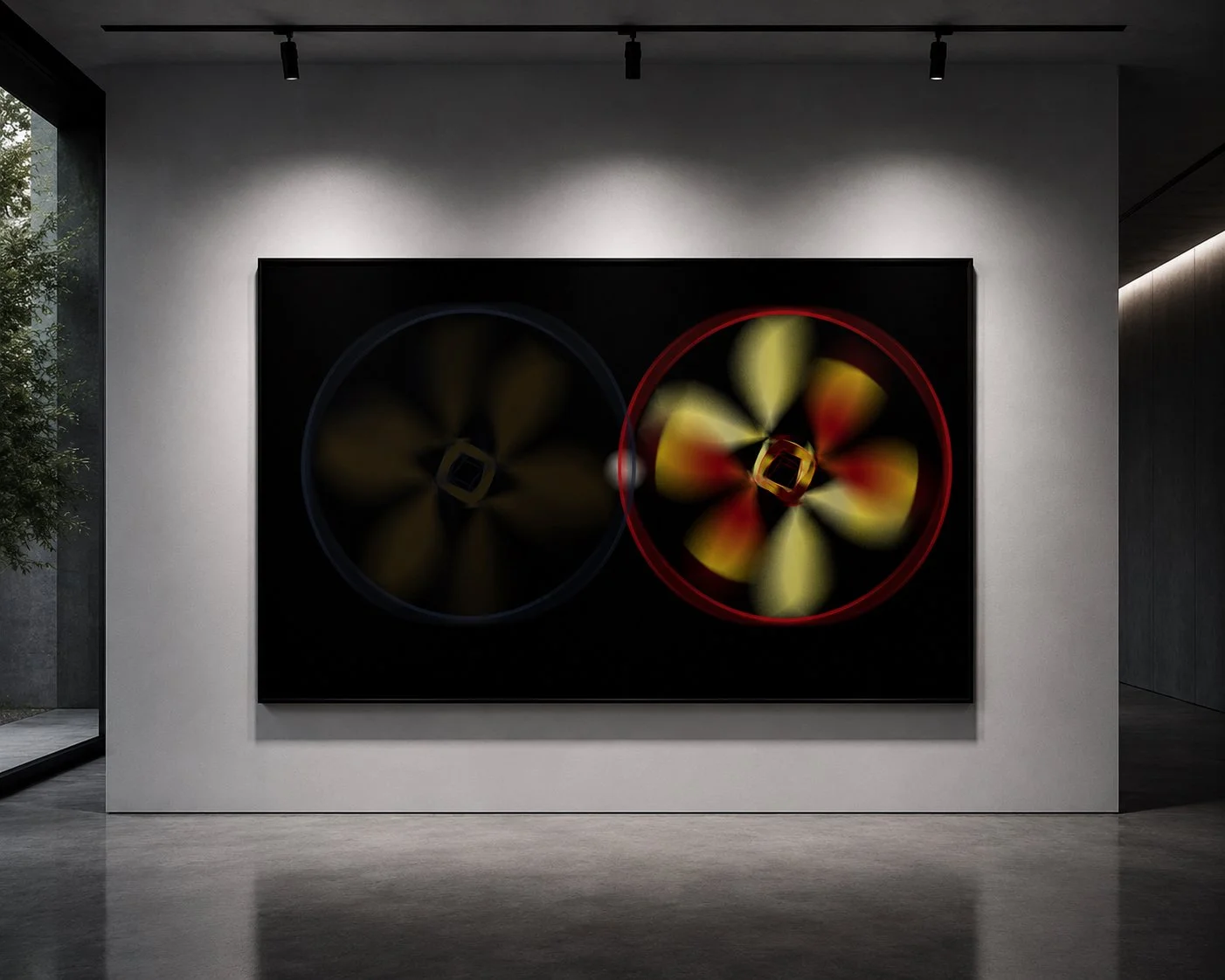
The artworks presented in this research were created entirely without the use of artificial intelligence. They originate from a human-led process of visual composition, experimentation, and artistic decision-making.
AI will be explored as part of the research process itself, not as a substitute for artistic creation, but as a professional tool for experimentation, interaction, and the exploration of new forms of artistic experience. This approach allows the research to examine how human creativity can evolve through dialogue with emerging technologies, while preserving the role of the artist as the author and initiator of the work.
EXPERIENCE 01 - LUMINOUS THRESHOLD
An immersive exploration of the artwork and its underlying meaning.
Each work will be explored through this process, allowing multiple series to evolve through experimentation, technology, movement, and perception.
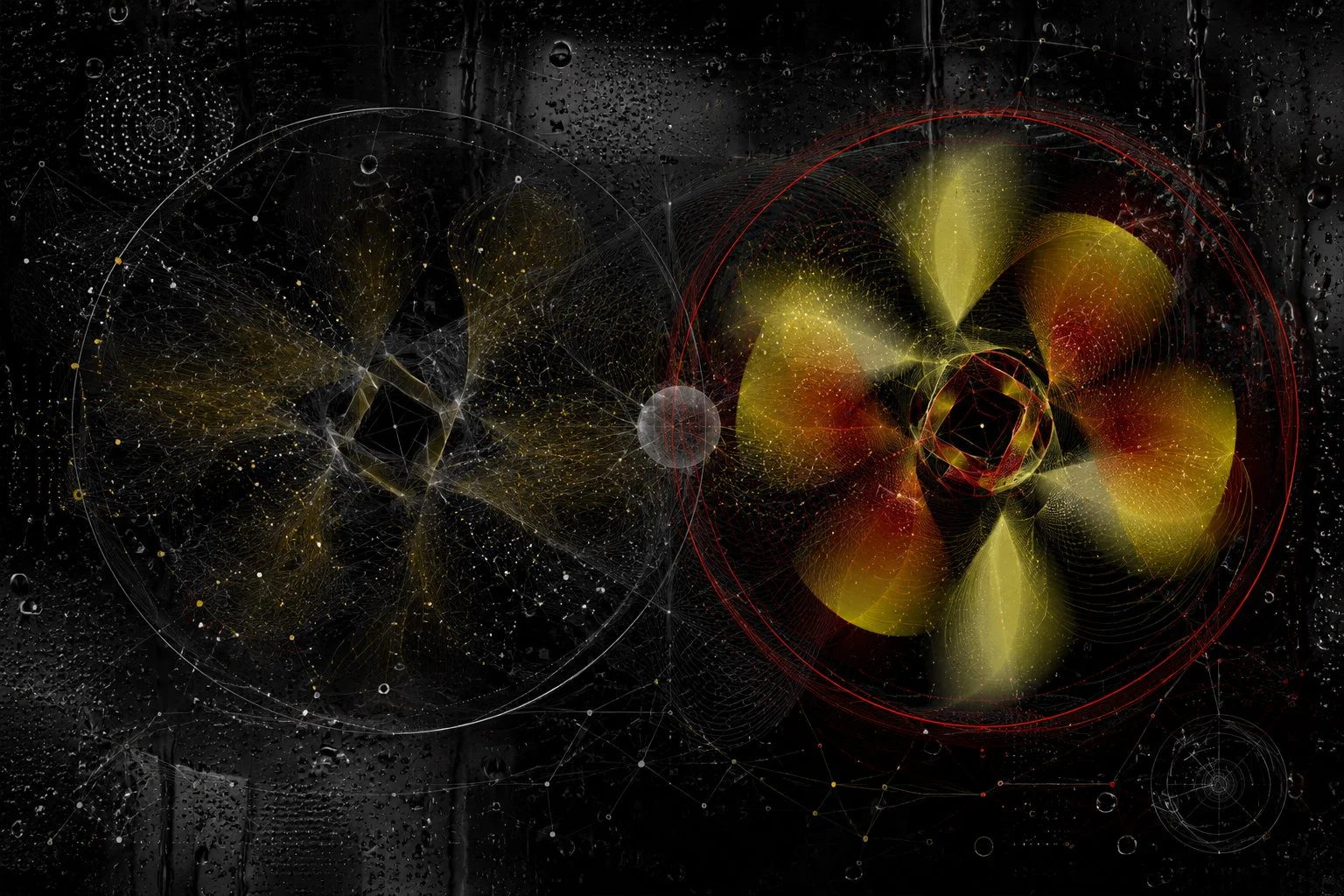
EXPLORING HOW WE PERCEIVE AND EXPERIENCE SPACE, IMAGES, AND MOVEMENT.
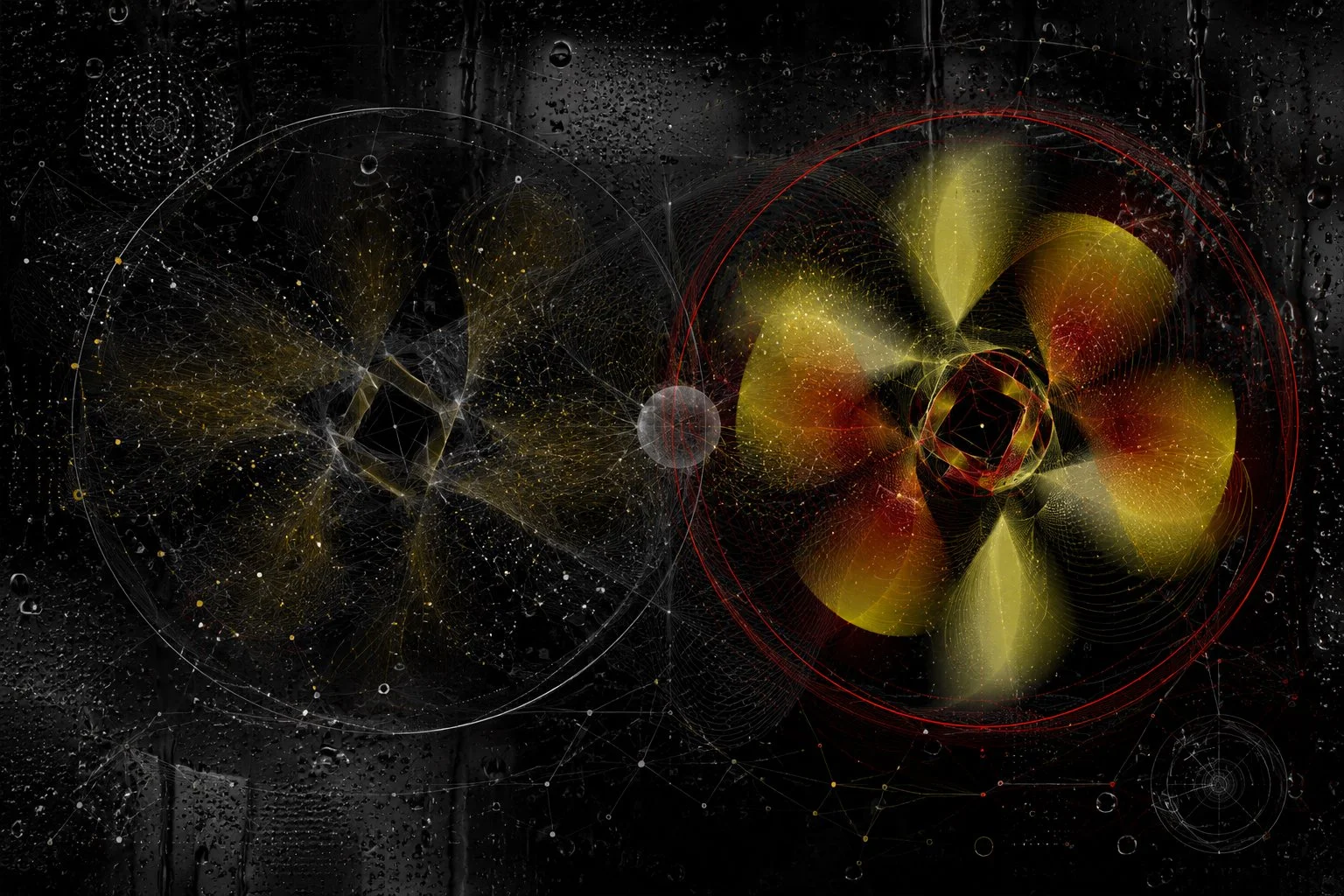
The research begins with questions about how we perceive, interpret, and experience the world around us. Rather than illustrating scientific concepts, the research uses them as points of departure for artistic exploration. Perception, light, movement, space, and visual response become ways of observing what happens between the artwork and the viewer.
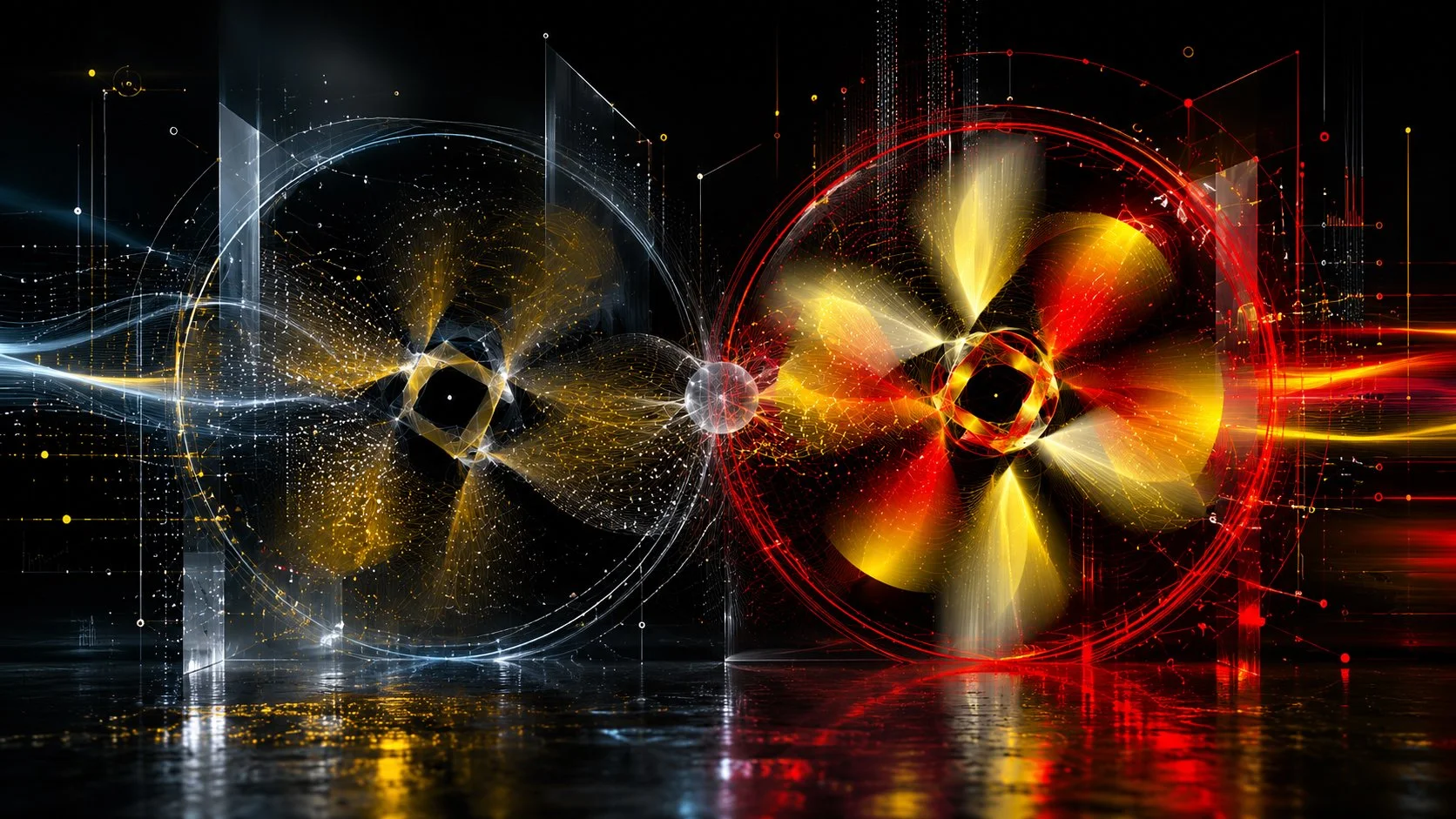
TECHNOLOGY BECOMES A MEDIUM FOR EXPANDING PERCEPTION.
Digital tools allow the artworks to move beyond the static image, introducing movement, light, space, and interaction. Technology becomes a way to transform how the work is experienced, rather than an end in itself. Through these possibilities, the research explores how an artwork can become an evolving visual environment.
ONGOING ARTISTIC RESEARCH